?What Is Stuttering
What Is Stuttering? Understanding Its Types, Symptoms, and the Factors That Affect Its Severity
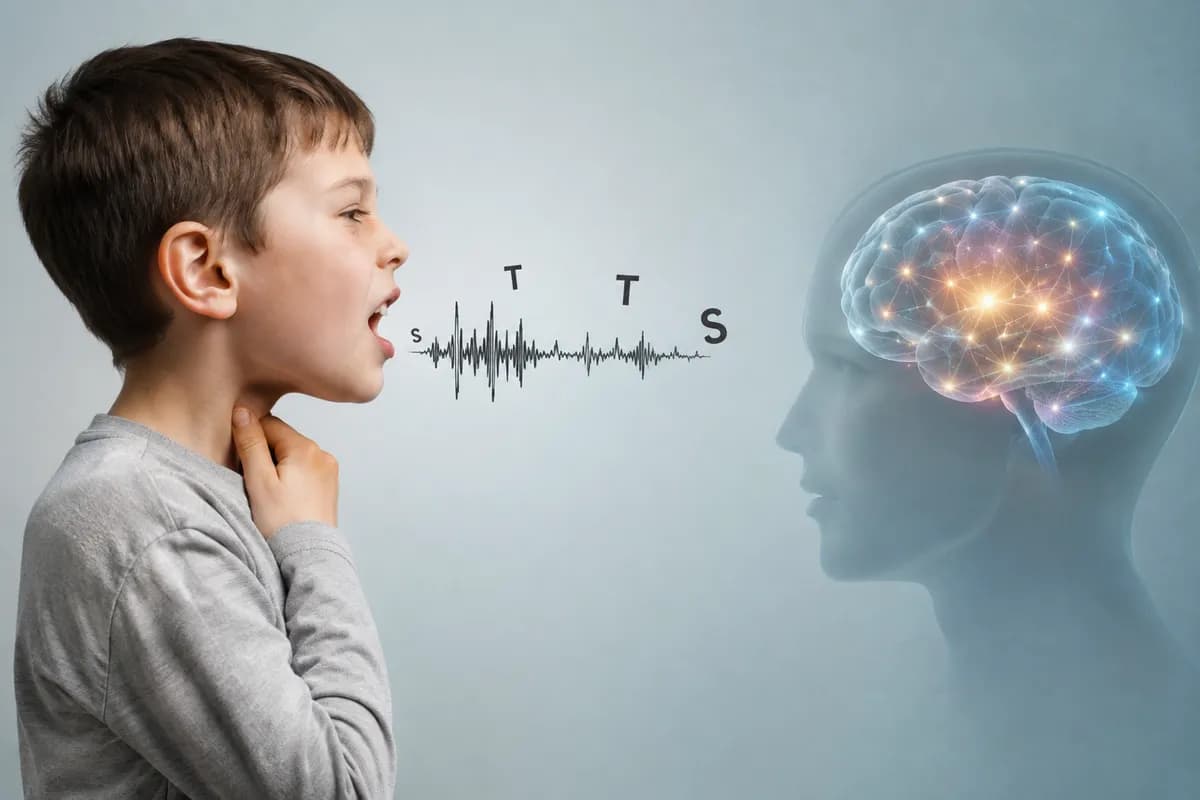
Stuttering is a speech fluency disorder characterized by involuntary interruptions while speaking. These interruptions may appear as repetitions of sounds or syllables, excessive prolongation of certain sounds, speech blocks, or avoidance of particular words. A person who stutters usually knows what they want to say but has difficulty producing words smoothly and continuously.
How Is Speech Produced?
Although speech may appear simple, it is actually a complex process. To produce fluent speech, the tongue, lips, jaw, larynx, vocal cords, and teeth must perform rapid, precise, and coordinated movements. The respiratory muscles and the muscles responsible for producing sound must also be timed accurately.
Any factor that disrupts this coordination and timing can affect speech fluency. Stuttering may begin during childhood development, or it may develop in adulthood as a result of factors such as a stroke or brain injury.
At What Age Does Stuttering Usually Begin?
Many children experience periods of disfluency between the ages of two and five, as their vocabulary and speaking skills expand rapidly. During this stage, a child may have difficulty combining sounds and forming sentences.
According to the information provided in the source, the prevalence of stuttering is approximately 4% among children and about 1% in the general population. However, not every instance of childhood disfluency develops into persistent stuttering. In some children, it decreases as their speaking skills improve, while in others it may continue into the school years and beyond.
Types of Stuttering
Stuttering can be divided into several main types based on its cause and the time at which it develops.
1. Developmental Stuttering
Developmental stuttering is the most common type of stuttering. It usually appears in children between the ages of two and five, when they are developing their language and speaking skills.
At this age, the child’s thoughts and vocabulary may develop more rapidly than their ability to express them fluently. As a result, the child may experience repetitions, pauses, or sound prolongations when expressing needs or forming sentences.
If this disfluency continues into the school years and beyond, the likelihood of persistent stuttering may increase.
2. Neurogenic Stuttering
Neurogenic stuttering occurs when the brain has difficulty coordinating the different systems involved in speech, including the nerves and muscles. This type of stuttering may develop after a stroke or brain injury.
In developmental stuttering, disfluencies often occur at the beginning of words. In neurogenic stuttering, however, disruptions may occur in different parts of a word. According to the source text, this type of stuttering may also be present during choral speaking, singing, or the repetition of a text.
Visible facial movements and signs such as fear or anxiety while speaking may be less common in neurogenic stuttering than in developmental stuttering.
3. Psychogenic Stuttering
Psychogenic stuttering is a rare type of stuttering. It may occur in people who have mental health conditions or who have experienced severe psychological stress.
However, stress or anxiety alone does not mean that every case of stuttering has a psychological cause. Psychological factors can increase the severity of an existing stutter, but stuttering is not always caused solely by anxiety or emotional difficulties.
Classification of Stuttering by Age
Stuttering can also be divided into three groups based on the person’s age:
Stuttering in preschool children
Stuttering in school-age children
Stuttering in adults
The age at which stuttering begins, how long it continues, and the person’s individual circumstances are important when selecting an appropriate assessment and treatment approach.
Main Symptoms of Stuttering
The symptoms of stuttering are not the same in every person. One person may mainly experience sound repetitions, while another may be more affected by speech blocks or prolonged sounds.
The main symptoms of stuttering include:
Repetition of sounds, syllables, words, or phrases
Prolongation of sounds beyond their normal duration
Sudden stopping of the speech organs and speech blocks
Trembling of the muscles around the mouth or jaw while speaking
Increased vocal loudness when prolonging certain sounds
Tension and visible effort when trying to say specific words
Delaying or avoiding particular words
Substituting sounds or changing the way a word is expressed to avoid stuttering
For example, a person may repeat a syllable several times or pause for a long time before saying a word that is difficult for them to pronounce.
Behaviors Associated With Stuttering
Stuttering is not limited to repetitions or speech blocks. Some people also display secondary behaviors while attempting to move through a moment of stuttering.
These behaviors may include:
Unusual movements of the head or limbs while speaking
Frequent blinking
Trembling of the facial muscles
Reduced eye contact
Tightening of the speech muscles
Unusual changes in vocal loudness
Expressions of embarrassment, anger, or heightened emotion
Avoidance of particular words
Fear of speaking in front of others
Reduced self-confidence or signs of depression
These behaviors may develop gradually in response to unpleasant experiences the person has had while speaking.
What Factors May Reduce Stuttering?
The severity of stuttering can vary across different situations. Many people who stutter speak more fluently when singing, whispering, or speaking in unison with others. Stuttering may also decrease temporarily when a person does not hear their own voice in the usual way.
One proposed explanation is that singing, choral speaking, and certain unusual speech patterns provide an external timing signal. This signal may help improve coordination between the areas of the brain responsible for planning and producing speech.
Stuttering may also decrease or disappear temporarily when a person speaks differently from their usual pattern, for example by changing the speed, rhythm, or intonation of their speech.
The Relationship Between Self-Confidence and Stuttering
There is a two-way relationship between speech fluency and self-confidence. Speaking fluently can increase a person’s confidence, while greater self-confidence may also help them speak more smoothly.
However, low self-confidence should not be considered the primary cause of stuttering. Negative experiences, teasing, pressure to speak quickly, and fear of being judged can increase a person’s anxiety and make their stuttering more severe.
When Should a Person Seek an Assessment for Stuttering?
According to the source text, if a speech fluency problem continues for more than six months, an assessment by a speech-language pathologist is necessary. Early diagnosis and intervention can help prevent the problem from becoming chronic. They can also help a child develop more appropriate patterns of fluent speech before unhelpful speech patterns become established.
Conclusion
Stuttering is a speech fluency disorder that may involve sound repetitions, sound prolongations, pauses, speech blocks, and avoidance of particular words. It may be developmental, neurogenic, or psychogenic and can occur in both children and adults.
The severity of stuttering is not always constant. It may be influenced by the speaking situation, self-confidence, psychological pressure, and the way a person hears their own voice. Correctly identifying the symptoms and consulting a speech-language pathologist at an early stage, particularly during childhood, can play an important role in managing and improving this condition.

please Login to leave a comment
Add Your Comment
Reviews