
Brain Mapping, QEEG, and Neurofeedback in Attention-Deficit/Hyperactivity Disorder (ADHD)
Brain Mapping, QEEG, and Neurofeedback in Attention-Deficit/Hyperactivity Disorder
Attention-deficit/hyperactivity disorder, or ADHD, is not evaluated solely by observing a person’s behavior. In some neurological approaches, the brain’s electrical activity is also taken into consideration. The file introduces the recording of brain signals using EEG, the preparation of a QEEG brain map, and the use of neurofeedback as methods for assessing or training brain activity.
Neurofeedback, as well as the more advanced method discussed in the file, SW-LORETA neurofeedback, is intended to provide feedback on brain activity and support the brain’s ability to self-regulate. However, these methods should be used only after a specialist assessment and alongside clinical evaluations.
What Is EEG?
EEG, or electroencephalography, is a method used to record the brain’s electrical activity. In this procedure, electrodes are placed on the surface of the scalp to record signals generated by brain activity.
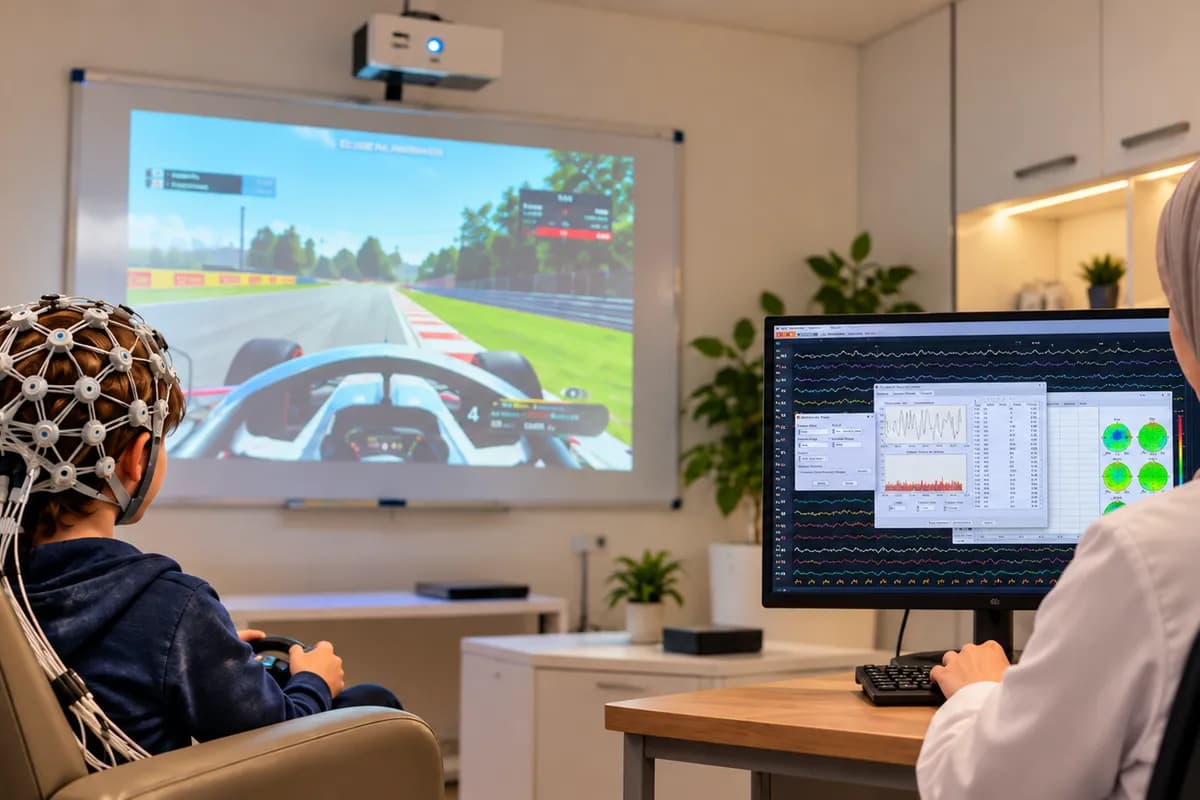
According to the file, during neurofeedback, brain activity is monitored through these electrodes while the individual simultaneously receives visual or auditory feedback.
The electrodes are used to record brain signals. The file explains that feedback may be delivered through a computer, images, videos, music, or games.
What Is QEEG, or Brain Mapping?
QEEG stands for quantitative electroencephalography. In this method, the brain’s recorded electrical activity is converted into numerical data so that patterns of brain activity can be examined more effectively.
The file explains that advances in engineering have made it possible to convert the brain’s electrical activity into numerical values and computational algorithms. This process is known as QEEG or brain mapping.
According to the file, the purpose of brain mapping is to examine different brain regions and patterns of brain activity. A neurofeedback program may then be designed on the basis of the results.
The images on pages 2, 6, 12, and 13 of the file also show examples of color-coded brain-activity maps. These images are used to illustrate differences in activity among various parts of the brain, but an image alone is not sufficient to establish a definitive diagnosis.
What Is Neurofeedback?
Neurofeedback is a form of biofeedback based on brain activity. The file describes it as a neuromodulation technique based on a brain-computer interface.
In this method, the brain’s electrical activity is recorded, and the individual receives feedback related to that activity. The aim is for the brain to gradually learn more appropriate activity patterns and improve its capacity for self-regulation.
According to the file, feedback may be provided in the following forms:
Playing music
Displaying an image
Playing a film or video clip
Playing a computer game
Changes in the way these stimuli are presented depend on the individual’s brain activity.
How Is Neurofeedback Performed?
First, electrodes are placed on the scalp to record the brain’s electrical activity. The software then processes the information it receives and provides feedback based on the pattern of brain activity.
For example, a film may be shown to the individual. When brain activity moves closer to the target pattern, the film continues to play normally. When brain activity moves away from the desired pattern, the image, sound, or course of the game may change.
The file states that the person influences the game, film, or music through brain activity without using their hands. Gradually, the brain learns how to regulate its activity in a particular state.
What Is the Goal of Neurofeedback in ADHD?
According to the file, neurofeedback training is intended to modify abnormal brainwave patterns and improve behavioral and cognitive functioning in children or adults.
In different sections of the file, increased attention, alertness, concentration, working memory, and certain cognitive functions are presented as goals or expected outcomes of this training.
The file also presents neurofeedback as a non-pharmacological method that may be used independently or together with other forms of treatment.
What Are Brainwaves?
When a group of neurons becomes active at the same time, it produces a wave-like pattern known as a brainwave.
The file divides brainwaves into four main frequency bands:
Delta: approximately 1 to 4 Hz
Theta: approximately 4 to 7 Hz
Alpha: approximately 8 to 12 Hz
Beta: approximately 13 to 30 Hz
This classification is used to examine patterns of brain activity in EEG and QEEG.
The Relationship Between Theta and Beta Waves and ADHD
The file states that some children with ADHD show increased theta-wave activity and decreased beta-wave activity.
According to the text, increased theta activity is associated with distractibility and inattention, whereas increased beta activity is associated with alertness and concentration. For this reason, one common neurofeedback protocol for ADHD attempts to increase beta activity and decrease theta activity.
Another section of the file also discusses increased activity in the lower-frequency theta range and reduced activity in the higher-frequency beta range among affected children. The theta-to-beta ratio is additionally introduced as one of the indicators used to assess cortical activity.
These patterns are not identical in every individual and should be interpreted alongside clinical symptoms and other assessments.
What Is SW-LORETA Neurofeedback?
The file introduces SW-LORETA neurofeedback as a more advanced form of neurofeedback. According to the text, this method focuses on activity in specific regions of the brain and is conducted using EEG and brain-mapping data.
The file refers to the effects of this method on areas such as the motor cortex, sensorimotor cortex, and cingulate cortex, stating that these regions play roles in cognitive and physical activity and in behavioral regulation.
The text also explains that once the affected regions have been identified through brain mapping, those regions may be targeted through neurofeedback training.
What Does the File Say About the Effects of Neurofeedback?
The file refers to several studies in which changes in cognitive processing, working memory, or ADHD symptoms were reported after neurofeedback sessions.
According to the text, some studies have reported improved cognitive processing, reduced core ADHD symptoms, and better working memory.
However, the file does not provide complete details regarding the number of participants, the design of all the studies, the duration of follow-up, or the limitations of the research. Therefore, this source alone is not sufficient to conclude that neurofeedback is equally effective for every individual.
Can a Brain Map Definitively Diagnose ADHD?
The file presents QEEG as one of the tools used to measure and examine brain activity. It also emphasizes the use of objective tools to support accurate diagnosis.
However, the material in the file does not indicate that ADHD should be diagnosed solely on the basis of a brain map. Diagnosing this disorder generally requires an assessment of symptoms, the individual’s history, the age or time at which symptoms began, observation of behavior in different environments, and a specialist evaluation.
QEEG should therefore be interpreted as part of a comprehensive assessment rather than as the sole diagnostic criterion.
Differences Between ADHD and Epilepsy in Brain Mapping
The final section of the file addresses the differential diagnosis of ADHD and epilepsy. This is important because some children with epilepsy may display symptoms resembling inattention or hyperactivity.
According to the file, there are both similarities and differences between the brain-activity patterns of children with ADHD and those of individuals with certain forms of epilepsy. In ADHD, increased delta and theta activity and changes in the theta-to-beta ratio are discussed. In some patients with epilepsy, increased delta, theta, alpha, or beta activity has also been reported in specific brain regions.
The file concludes that QEEG may help specialists examine differences in brain-activity patterns and select an appropriate treatment pathway.
Does Neurofeedback Replace All Other Treatments?
In some sections, the file presents neurofeedback as an alternative to medication. In other sections, it describes neurofeedback as an independent method or as a complement to other treatments.
Therefore, even on the basis of the file itself, neurofeedback cannot be regarded as a definitive replacement for all treatments. The individual’s condition, the severity of symptoms, co-occurring problems, assessment results, and the specialist’s opinion all influence the choice of treatment.
Medication should not be discontinued or changed simply because neurofeedback has been started, unless this is done under a physician’s supervision.
Conclusion
EEG is a method for recording the brain’s electrical activity, while QEEG converts this activity into quantitative data and a brain map. Neurofeedback uses these same signals to provide the individual with visual or auditory feedback intended to strengthen the self-regulation of brain activity.
The file identifies reducing theta activity, increasing beta activity, and improving attention and certain cognitive functions as goals of neurofeedback training for ADHD. Brain mapping is also considered useful for examining brain-activity patterns and assisting with differential diagnosis in conditions such as epilepsy.
However, neither brain mapping nor neurofeedback should be regarded as a definitive diagnostic or treatment method without a clinical assessment and the opinion of a qualified specialist.

please Login to leave a comment
Add Your Comment
Reviews